Go Frog: A Fun Display Typeface for Modern Digital Branding
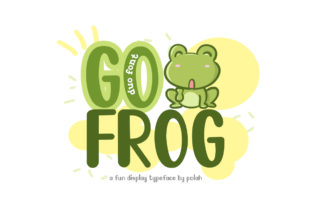
I remember the exact moment I needed to redesign a hero section for a boutique online store selling handcrafted ceramics. The previous design felt safe but lacked personality, and my client wanted something that immediately communicated creativity without sacrificing professionalism. That was when I discovered Go Frog, a fun display typeface that instantly transformed the visual hierarchy of the page. As a web designer constantly searching for fonts that balance character with usability, testing this typeface in a real-world layout revealed why it stands out among other digital assets.
Go Frog for Bold Website Headers and Hero Sections
When integrating Go Frog into website headers, the Super Bold style creates an immediate focal point that demands attention while maintaining legibility on large screens. In my recent project, placing the font over a high-contrast image banner for a product landing page proved that its unique curves could cut through visual clutter better than standard sans serif options. The weight distribution is perfect for large-scale headlines where you need to establish brand identity instantly, making it ideal for the top tier of your visual hierarchy. Unlike many decorative fonts that become unreadable when scaled up, Go Frog retains its structural integrity, ensuring that visitors understand your value proposition within seconds of landing on the page.
Why Go Frog Works Better Than Generic Display Fonts
The difference between a generic display font and Go Frog lies in its specific character set and the way it handles spacing in digital environments. While many fonts look good in isolation, they often fail when used in responsive layouts or when paired with body text. I tested Go Frog against several competitors by creating a mockup for a coaching website, and the regular style offered a playful yet professional tone that resonated with the target audience. Its "awesome characters" provide enough distinctiveness to make a logo design feel custom-tailored rather than template-based, which is crucial for building trust with potential clients who visit your site.
Go Frog for Magazine Covers and Digital Posters
For digital publications like magazine covers or promotional posters, Go Frog offers a versatility that bridges the gap between print aesthetics and screen readability. When designing a campaign landing page for a creative agency, I used the font to highlight key dates and event titles, finding that its bold strokes held up well even on smaller mobile devices. The font's ability to handle both regular and super bold weights allows designers to create dynamic contrast without needing multiple typefaces, streamlining the loading process and improving overall performance. This efficiency is vital for modern web projects where speed and visual impact must coexist seamlessly.
Optimizing Go Frog for Mobile Responsiveness
One of the most critical aspects of using any display font is ensuring it remains effective across different screen sizes. I found that Go Frog required minimal adjustment when scaling down from desktop to mobile views, as the letterforms are designed with clarity in mind. For small buttons or call-to-action areas, the Super Bold version provides excellent visibility, preventing users from missing important navigation cues. However, for longer paragraphs or supporting text, it is best reserved for short phrases or headings to maintain a clean reading experience. This strategic placement ensures that the font enhances the user journey rather than distracting from the content.
Go Frog for Logos and Brand Identity Systems
Creating a cohesive brand identity often starts with a strong typographic foundation, and Go Frog serves as an excellent anchor for logos and brand kits. During a redesign for a portfolio homepage, I utilized the font to construct a custom wordmark that felt approachable yet authoritative. The unique shapes of the letters allow for creative manipulation, enabling designers to add subtle flourishes or geometric adjustments that reflect a brand's specific personality. Whether you are working on name cards, business logos, or social media graphics, the consistency provided by this font family helps establish a recognizable visual language that grows with your business.
Pairing Go Frog for Balanced Web Layouts
To maximize the impact of Go Frog, pairing it with a neutral sans serif font for body copy creates a harmonious balance between excitement and readability. In my experience, combining Go Frog with a simple, clean typeface like Inter or Roboto allows the display font to shine without overwhelming the reader. This combination works particularly well for editorial designs, course sales pages, and blog posts where long-form content needs to be accessible. By limiting the use of Go Frog to headlines, subheadings, and accent elements, you can guide the user's eye naturally through the page, improving engagement metrics and time-on-site.
Go Frog for Large-Scale Campaigns and Event Pages
For large-scale campaigns or event pages requiring high-impact visuals, Go Frog delivers the necessary presence to capture attention in crowded digital spaces. I recently applied the font to a promotional banner for a digital workshop, where the Super Bold style ensured the message remained clear even when viewed on low-resolution screens. The font's robust structure prevents it from looking washed out or blurry, which is a common issue with thinner decorative fonts in web environments. This reliability makes it a safe choice for commercial projects where first impressions matter significantly.
Technical Considerations for Webfont Implementation
Before implementing Go Frog in a live project, it is essential to check the available file formats and licensing terms to ensure compliance with your specific use case. Most premium display fonts come with webfont licenses that allow for embedding via CSS, but verifying multilingual support and alternate glyphs can save headaches during development. For designers working on international sites or complex layouts, having access to a comprehensive character set ensures that special symbols and accents render correctly. Additionally, checking the included styles—such as the Regular and Super Bold variants mentioned in the product details—helps you plan your typography scale effectively without needing to purchase additional weights.
Go Frog for Creative Portfolios and Personal Brands
Personal branding relies heavily on visual distinctiveness, and Go Frog offers a playful edge that sets creative professionals apart from corporate competitors. When I updated a personal portfolio site, using the font for section titles added a layer of personality that reflected the designer's unique style. It works exceptionally well for showcasing work in a gallery format, where each project title needs to stand out against the background imagery. The font's ability to convey fun and energy makes it suitable for industries like marketing, education, and lifestyle, where connecting emotionally with the audience is paramount.
Final Thoughts on Typography Choices
Selecting the right typeface is one of the most impactful decisions a web designer can make, influencing everything from user perception to conversion rates. Go Frog proves that a fun display typeface can still serve serious design purposes when applied with intention and care. Its dual-weight system provides flexibility for various digital applications, from tiny UI elements to massive hero banners. By prioritizing readability and visual hierarchy, this font empowers creators to build polished online brand experiences that resonate with their audience. Whether you are launching a new startup, revamping a blog, or designing a high-end e-commerce store, incorporating Go Frog into your toolkit can elevate your design game and help your projects stand out in a crowded digital landscape.